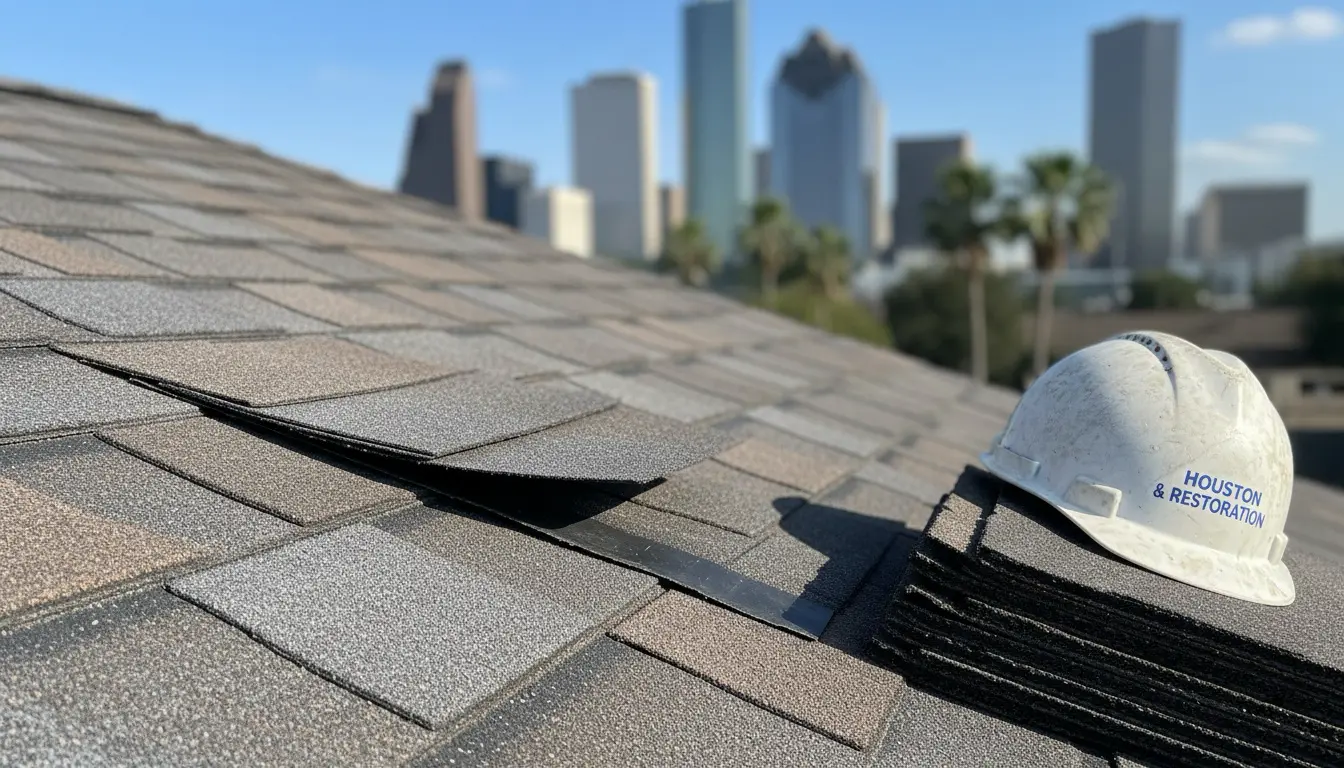
Office building roofs run on a different cadence than strip centers. Larger square footage, denser HVAC, taller access challenges, and warranty expectations that match the asset class. We scope office building work for property managers, ownership groups, and Class B and Class C operators who need predictable execution.
Office building roofs share the basics with strip centers but add several layers of complexity that change scope and pricing.
HVAC density. Office buildings carry 2-4x the rooftop HVAC equipment of strip centers per square foot. Every unit is a curb, a duct penetration, an electrical penetration, sometimes a refrigerant line set. Scope work has to inventory every unit and every penetration. Repairs that ignore HVAC details fail at the curbs, not the membrane.
Equipment access & lay-down. Multi-story office buildings can’t lay material on adjacent ground — freight elevator coordination, crane lifts, or roof-edge hoists are part of the project plan. We document this in the bid so there are no scope-of-work surprises mid-project.
OSHA fall protection. Buildings over single-story require permanent or temporary fall protection systems for roof workers. Cost line in any office building project. Included in our scope, not a hidden add.
Building screening & aesthetics. Many Class B/A buildings have parapet walls, equipment screening, or design elements that affect roof scope. Replacing or repairing screening, coordinating with building skin contractors, working around architectural details — all part of the project.
NDL warranty paths. Class B and above office buildings typically warrant for warranty terms longer than what standard contractor warranties cover. Manufacturer NDL warranties (No Dollar Limit) require certified installation, factory inspections, and specific system specifications.
White thermoplastic membrane. 80-mil for Class A buildings or high-traffic roofs — better puncture resistance and longer warranty paths.
Premium thermoplastic. Better chemical resistance than TPO — preferred for buildings with HVAC condensate exposure or where grease/chemical contact is possible.
Silicone or acrylic coating over existing roof in serviceable condition. 10-15 year extension; cost-effective alternative to tear-off.
Pre-construction meeting with building engineer. Before tear-off starts, we walk the roof with your property manager and building engineer. Review HVAC operation requirements, freight elevator scheduling, security/access procedures, after-hours protocols, lay-down areas, debris removal logistics. Documented; signed; project-of-record.
Tenant or occupancy notification. Multi-tenant office buildings get tenant notification through property management with our schedule and scope summary. Owner-occupied buildings notify staff through their own channels — we provide the content.
HVAC coordination. Most office building reroof projects need brief HVAC shutdowns for membrane work at curbs. We coordinate with building HVAC service for shutoffs, isolation, and restart. Not done off-the-cuff; scheduled and documented.
Daily site close-out and dry-in. No exposed substrate overnight on an occupied building. Period. Every work day ends with a watertight roof.
Manufacturer inspections during installation. NDL warranty paths require factory representatives to inspect the work in progress — typically at substrate prep, mid-membrane install, and final completion. We coordinate, schedule, and pass these inspections.
Closeout package. Final delivery includes warranty registration (manufacturer + workmanship), as-built drawings of any drainage modifications, full photo documentation, recommended maintenance schedule, and contact information for warranty service. Same office, same family, same number.
Often yes — TPO, modified bitumen, and PVC are the workhorses for both. The differences are scale, HVAC density (office buildings often have far more rooftop equipment), warranty expectations (longer terms, NDL warranties more common), and access constraints (taller buildings, equipment screening, OSHA fall protection requirements).
NDL stands for No Dollar Limit — the manufacturer warrants the entire roof system without a cost cap. NDL warranties are common on Class A office buildings and require certified installation with manufacturer inspections during the project. Recommended for any office building you plan to own beyond 10 years.
Yes, with planning. Standard for office buildings: tear-off and installation work happens after-hours or weekends to avoid HVAC disruption and roof noise during occupancy. We coordinate with building engineers on freight elevator access, lay-down areas, and any required HVAC shutoffs.
Highly variable. A 50,000 sq ft single-story office runs 4-8 weeks of active work. A multi-story Class B office with complex HVAC runs 8-16 weeks. Phased work or weekend-only schedules extend timeline but reduce occupancy impact.
For most reroof projects, no — we work from existing structural capacity. For roofs adding significant new equipment, increasing dead load (lightweight insulating concrete to ballasted system, etc.), or requiring structural alterations, a licensed engineer is required by code. We coordinate engineer scope when needed.
Manufacturer NDL warranty covers material and workmanship for the term — if a leak occurs in a covered area, the manufacturer pays for diagnosis and repair. Our workmanship warranty (separate from manufacturer) covers our installation labor for 5-10 years depending on system. We’re the same office, same family, same number when you need warranty service.
Free property walk with engineer-grade documentation. NDL warranty paths. Off-hours execution.
Three fields. Real human, every time. No bots. We answer fast because the roof can't wait.
Three fields. We'll get back to you.